The Clean Entry: How to Join a Fast-Moving UK Meeting Without Over-Apologising

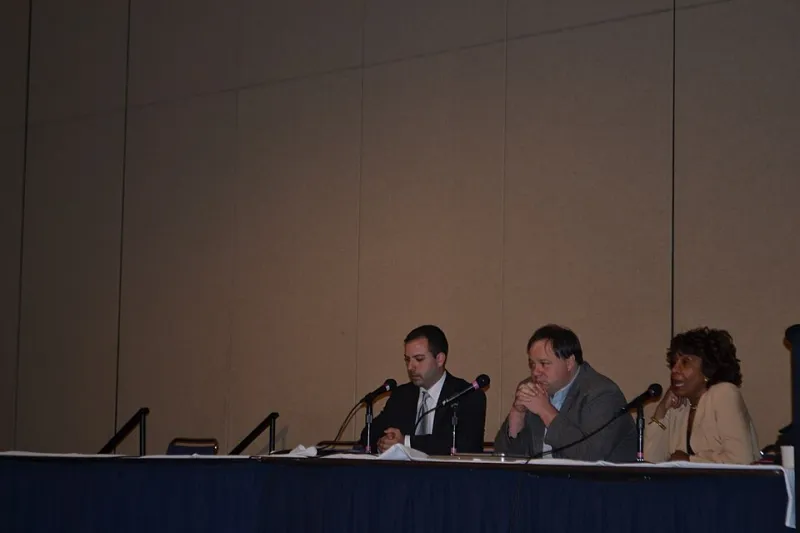
Photo: diverse business professionals in a London meeting room mid-conversation, via getdrawings.com
UK meetings can feel like a conversation already in progress. The topic moves, several people speak at once, and the pause you are waiting for is often a breath rather than an invitation. For capable international professionals, the challenge is rarely the argument. It is the entry.
This is not a problem of fluency. It is a problem of timing, permission and the language of polite interruption. The solution is not to become louder or more aggressive. It is to develop a clean entry: a short, warm, confident phrase that claims the floor without turning the meeting into a contest.
Why the Perfect Gap Rarely Arrives
In many UK workplaces, turn-taking is managed through subtle signals: a slight intake of breath, a repeated word, a glance towards the chair, or a raised hand at the edge of the table. None of these signals is a formal invitation. They are cues that experienced meeting participants read in real time. If you wait for complete silence, you may wait until the agenda has moved on.
There is also a cultural layer. British politeness often uses hedging to keep discussion comfortable. A colleague may say 'perhaps we could consider' when they mean 'I disagree'. This does not mean the floor is closed. It means the floor is being shared in a particular style. International professionals who expect a clear handover can mistake indirectness for exclusion.
The result is familiar. You prepare a strong point, wait for the right moment, and find that the conversation has already turned. By the time you speak, your contribution feels late. The meeting moves on, and the point remains unsaid.
The Hidden Cost of Over-Apologising
The language of entry matters because it sets your status in the room. Consider the difference between 'Sorry, just quickly, if I could possibly add something...' and 'I'd like to add one point on that.' The first phrase contains three apologies before it contains an idea. It asks for forgiveness rather than attention. The second phrase is still polite, but it is declarative. It assumes that your contribution has value.
Over-apologising is common among skilled non-native speakers. It can come from a genuine wish to be courteous, from uncertainty about grammar, or from prior experience of being talked over. Yet in a UK meeting, excessive hedging can be read as a lack of conviction. Listeners may not consciously judge you, but they will follow the signal you send. If you present your point as an intrusion, others may treat it as one.
Warmth does not require weakness. Authority does not require bluntness. The aim is a clean entry: brief, relevant and considerate, with no unnecessary apology attached.
Three Clean Ways to Take the Floor
The phrases below are not scripts to repeat mechanically. They are templates to practise until they sound like you. Use the person's name where you can; it directs attention without raising volume.
1. 'May I come in here?'
This is formal, clear and well suited to a meeting where several people are speaking. It signals that you have something relevant to add without suggesting that the previous speaker was wrong. Use it with a name when possible: 'Sarah, may I come in here?' Then pause briefly and state your point in one sentence. The pause matters. It turns a request into a handover.
2. 'I'd like to add one point on that.'
This phrase is declarative rather than apologetic. It works best when the topic is still live and your contribution connects directly to what has just been said. Keep the first sentence short: 'I'd like to add one point on that. The cost assumption may be too low.' You are not asking for permission in a roundabout way. You are telling the room why you are speaking.
3. 'Can I build on what you've just said?'
This is collaborative and useful when you want to extend or gently challenge an idea. It acknowledges the previous speaker before you move the discussion. Follow it immediately with substance: 'Can I build on what you've just said? I see a different risk for the northern team.' The phrase earns goodwill; the next sentence earns attention.
After the Entry: Keep It Short, Then Yield
A clean entry is only half the skill. The other half is knowing when to stop. In UK business meetings, brevity is a form of courtesy. Make one point, give the evidence if it is essential, and then hand the floor back. A useful structure is: entry phrase, headline point, one supporting detail, and a closing signal such as 'That's my main concern' or 'I'll send the detail afterwards.'
If someone speaks over you, do not retreat into apology. Hold your ground calmly: 'I'll finish this thought and then hand over.' If you are interrupted because your point is unclear, simplify it. If you are wrong, say so briefly and move on. The goal is not to win every exchange. It is to be a reliable voice in the room.
A Five-Minute Practice Drill
Practice works best when it is specific and short. Try this drill three times this week.
First, write the three entry phrases on a card. Say each one aloud with a neutral, warm tone. Remove any 'sorry', 'just' or 'possibly' that has crept in. Record yourself on your phone and listen once. You are checking for pace, not accent.
Second, set a timer for fifteen seconds. Imagine a colleague has just made a point you disagree with. Use one entry phrase, state your point in one sentence, and stop. Repeat with the other two phrases.
Third, ask a colleague to help for five minutes. They speak on a work topic; you enter at around ten seconds using one phrase, make one point, and yield. Swap roles. The repetition builds the timing that a real meeting demands.
Politeness With a Spine
The polite interruption is not a contradiction. It is a professional skill. In 2026, UK workplaces are more international and more fast-moving than ever, but the underlying expectation remains: contribute clearly, respect the room, and do not disappear from the discussion.
If you have been waiting for a gap that never comes, stop waiting for permission. Prepare a clean entry, keep your first sentence short, and let your voice take its place. Perfect English coaching can help you rehearse the language and the timing, but the principle is yours to use in the next meeting: courtesy is not silence, and confidence is not noise.