What They Really Mean: Decoding British Workplace Politeness in 2026

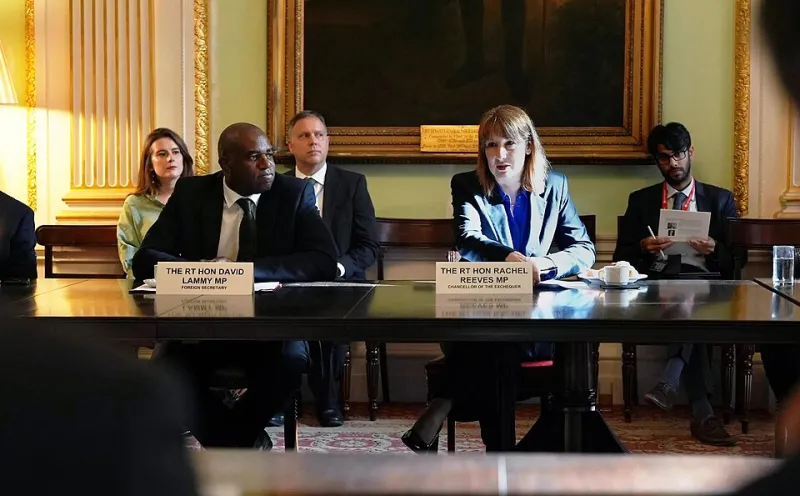
Photo: Basher Eyre, CC BY-SA 2.0, via Wikimedia Commons
Politeness as a system, not a riddle
In many UK workplaces, the sentence you hear and the message being sent are related but not identical. Newcomers sometimes read this as evasion, or worse, as insincerity. A more useful interpretation is that indirectness functions as risk management: it protects working relationships, leaves room for correction, and allows disagreement to be voiced without anyone losing face. Once you can see the function behind the form, the phrases stop feeling like traps and start looking like tools — tools you can learn to read, and to use.
It is worth saying plainly that British communication is not uniform. A product team in Bristol, a manufacturer in the Midlands and a public body in Cardiff will not share identical habits. Sector, seniority, region and personality matter far more than any national stereotype. Treat what follows as patterns to watch for, not laws to apply blindly.
Six phrases worth knowing
'With the greatest respect…'
This is usually a cushion placed before a disagreement. It is not, in most meeting rooms, a compliment. The words that follow carry the real content, so train yourself to respond to the substance rather than the softening. Occasionally the phrase is genuinely deferential; context and tone will tell you which.
'I hear what you're saying'
Sometimes agreement. More often acknowledgement without commitment: your point has been registered and the speaker is not yet persuaded. Do not treat it as a yes.
'Let's park that'
A deferral. It may be legitimate — the agenda is full, the decision belongs elsewhere — or it may be a soft no. The way to find out is to ask for a date.
'That's an interesting idea'
Warm when it is followed by specifics: interesting, and how would that work with the March deadline? Cooler when it stands alone and the conversation moves on. 'That's brave' tends to signal doubt rather than admiration.
'I'll leave that with you'
Delegation with an expectation of follow-up. It is not a dismissal. Confirm the deliverable and the date before you leave the room.
'As per my last email'
Now widely read as mild irritation. Use it sparingly. If you need to chase, chase with a clear ask rather than a reproach.
Two more worth filing away: 'We'll take that away' means no decision today, and 'not to worry' usually closes a minor issue — though repeated in a flat tone, it can signal suppressed frustration.
Reply scripts that hold their ground
The most reliable structure is acknowledge, clarify, propose. It signals good faith while keeping your position visible.
- 'Thanks — I want to make sure I have the ask right. You would like me to hold the launch until the legal review lands, rather than pause it altogether. Have I understood?'
- 'I am comfortable parking it. Shall we put fifteen minutes in the diary for the fourteenth so it does not drift?'
- 'May I test that? My concern is the cost of a second review cycle. If we can cap it at two days, I think we can make it work.'
- 'I would like to push back, gently. I do not think the timeline is realistic, and I would rather say so now than in three weeks.'
- 'I hear the concern about resource. What would need to be true for us to prioritise this in November?'
Note how British directness often announces itself: 'I will be direct', 'just to be clear', 'to put it plainly'. Those flags are an invitation. When you hear one, the speaker is asking you to take the next sentence literally.
Being direct without being blunt
Bluntness is not the same as clarity. A blunt message carries no cushion, no rationale and no route forward. A clear message carries a brief cushion, a reason and an explicit ask. UK colleagues generally accept directness when it is attached to a rationale and a proposal, which is why the word 'because' does so much quiet work in British offices.
Three habits are worth building. First, name the thing: say 'I want to flag a risk', then state the risk. Second, give the reason before the request, so the request sounds considered rather than arbitrary. Third, offer a route: if not A, then B, and here is what B would require.
Written channels need more structure, not more hedging
Email strips out tone, so it rewards structure. Use a greeting, a one-line purpose, bulleted asks, a clear next step and a tidy sign-off. Avoid stacked hedges — 'I was just wondering if perhaps you might possibly' — which bury the request and invite delay. 'Could you confirm by Thursday 12 November whether the contract can be signed?' is both polite and competent.
Build your own phrase bank
For two weeks, note the phrases you hear and what followed them. Did the meeting end with a decision, a date, or nothing at all? Patterns will emerge quickly. If you are unsure, ask a trusted colleague a direct meta-question: 'When Sarah says she will take it away, does that usually mean a decision this month?' Most people are pleased to be asked and rarely offended.
Confidence follows clarity
The goal is not to become more British. It is to become more legible. You do not need to imitate indirectness in order to read it. Use plain, courteous English, state your ask, check your understanding and close the loop. That combination earns trust in any UK office, and it travels well beyond these shores.