The Name at the Table: Introducing Yourself Clearly in UK Workplaces

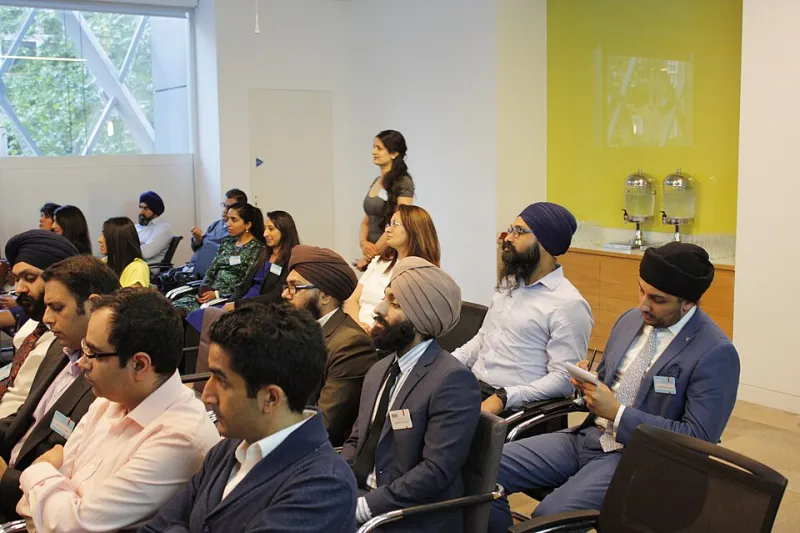
Photo: diverse professionals introducing themselves around a UK meeting table, name badges and notebooks, natural office light, via www.curacaokarnaval.com
In UK workplaces, names are exchanged quickly. A handshake at reception, a round of introductions on a video call, a client meeting that begins before everyone has settled: each moment asks you to say a name and to hear one. For international professionals, this can feel disproportionately significant. A name is personal, and mispronunciation can sound like a small verdict on belonging. It is more useful to treat names as part of professional clarity. The aim is not to erase an accent or adopt a new identity. The aim is to help colleagues address you accurately, and to extend the same care to them.
The first ten seconds
A clear introduction does not require a long explanation. It requires a short pronunciation cue, offered naturally. Instead of beginning with an apology, begin with your name and one simple anchor.
- 'I am Ana Ribeiro. Ana like Anna, and Ribeiro with a soft r.'
- 'My name is Xiaoyu Chen. Xiaoyu is pronounced shao-you.'
- 'I am Marek Nowak. Marek rhymes with barrack; Nowak has a short o.'
The cue should be brief and optional in tone. A common mistake is to over-explain before anyone has asked. Too much detail can make the name seem like a problem rather than a fact. A single clarifying phrase is usually enough. In UK teams that work across Microsoft Teams, Outlook and shared documents, a phonetic spelling in your profile can also help without requiring a speech every time you meet someone. Use it as a quiet aid, not as a disclaimer.
Asking colleagues to repeat their names
British workplace politeness often encourages people to nod along rather than admit uncertainty. That is understandable, but it does not help anyone. If you did not catch a name, ask early and ask plainly.
Useful phrases include:
- 'I want to make sure I have that right. Could you say your name again?'
- 'Would you mind spelling that for me? I would rather get it right than guess.'
- 'Let me repeat that back: Priya Nair, with the stress on Priya?'
In a meeting, keep the request small. 'Before we move on, I would like to check I am saying your name correctly' is clear and considerate. Avoid turning the moment into a performance of apology. You are gathering accurate information, not confessing a failure. If you realise later that you have been mispronouncing a colleague's name, a private word is often better than a public correction. 'I have just realised I may have been saying your name incorrectly. Could you put me right?' is direct without being dramatic.
Correcting a mispronunciation without over-apologising
When someone says your name incorrectly, the first correction should be light and forward-looking. A short adjustment is usually more effective than a speech about how difficult your name is.
- 'Almost. It is [name], with the stress on the second syllable.'
- 'Thanks. Just to fine-tune it, it is [name].'
- 'I know it is not familiar. I appreciate you getting it right. It is [name].'
If the error continues, you can be firmer while remaining courteous. 'I would prefer [name] in work settings' is a complete sentence and does not require an apology. If a colleague has given you an unsolicited shortened version of your name, you are entitled to say, 'I go by [name] at work, thank you.' This is not rudeness. It is consistency.
There is a difference between an honest difficulty and a casual disregard. Most UK colleagues will welcome a clear cue. A few may need reminding. Correct once, then move the conversation on. Over-apologising can unintentionally signal that your name is an inconvenience. Quiet repetition signals that it is simply your name.
Introducing other people smoothly
Good introductions are short, relevant and generous. They give the person being introduced a clear entry point. A useful formula is: name, role, relevance, then hand over.
- 'This is Priya Nair, our new data lead. Priya, may I introduce James from operations?'
- 'I would like you to meet Tomasz Kowalski. Tomasz is supporting the client review this quarter.'
- 'Joining us is Dr Aisha Rahman, who will take us through the compliance points.'
If a name is likely to be unfamiliar, add a brief cue, but do not speak for the person. 'This is Aisha Rahman, pronounced eye-ee-sha' is helpful. A commentary on the origin or spelling of the name is not usually necessary unless the person offers it. Pause after the name. Let the person speak for themselves. In meetings, the chair can set the tone by modelling accurate pronunciation and by inviting each person to introduce themselves when time allows.
Memory habits for everyday office life
Remembering names is a skill before it is a talent. A few small habits make a difference.
Repeat the name immediately when you hear it. Use it once in your first reply, then again at the close of the conversation. Write it in your notes after the meeting, together with a short pronunciation cue. Link the name to context: the project, the team, the client. Before a call, spend ten seconds reviewing the names of the people attending. Do not tell yourself that you are terrible with names; tell yourself that you are building a habit.
In 2026, UK teams are often distributed across offices, homes and client sites. That makes deliberate memory more important, not less. A name in a diary note or a meeting record is a professional courtesy. Use it carefully and ethically, as part of ordinary preparation rather than surveillance.
When the shoe is on the other foot
If your own name is often misheard, decide on a preferred pronunciation and use it consistently. You may offer both the English version you use at work and the original pronunciation, but you do not have to choose between clarity and identity. Consistency helps colleagues learn. A short cue helps them succeed.
Names are part of the way professional respect is performed in UK workplaces. They are not a test of accent, and they are not a demand for assimilation. They are a practical matter of accuracy. Say your name clearly, ask for others with ease, correct without apology, and introduce people with enough care that they can enter the conversation on their own terms. That is not a small courtesy. It is professional confidence in plain sight.